
The Surprisingly Dramatic Stories Behind Where One State Ends and Another Begins
At first glance, state borders appear fixed and straightforward. They are shown as clean lines on a map, giving the impression that they were always clearly defined. In reality, many U.S. state borders are the result of complex decisions, negotiations, and conflicts that unfolded over long periods.
Understanding how these boundaries were formed reveals a deeper layer of American history. U.S. state borders are not just geographic divisions; they reflect political compromise, natural limitations, and historical circumstances.
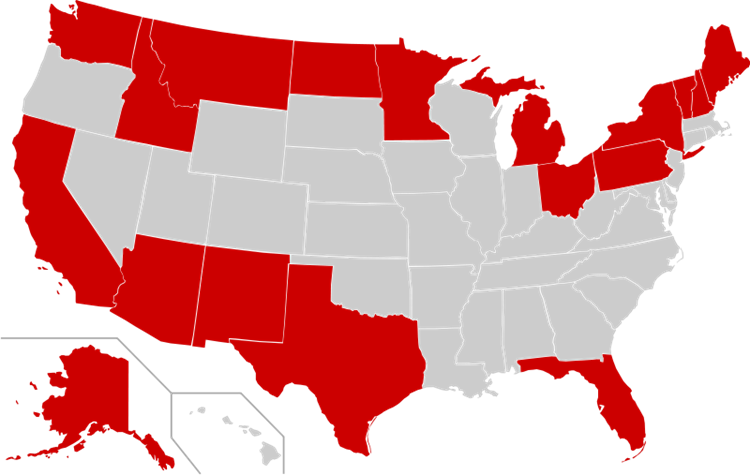
The Illusion of Straight Lines
When you look at a map, many borders appear as straight lines, especially in the western part of the country. These lines suggest precision and simplicity, but they often hide a more complicated reality.
In several cases, straight borders were drawn based on latitude and longitude rather than physical features. This approach was used to simplify division, particularly in areas that were not yet fully explored.
However, this method introduced inaccuracies, as early surveying tools were not always precise. As a result, some borders do not align perfectly with their intended coordinates.
Natural Features as Boundaries
Not all borders were drawn arbitrarily. Many states use natural features such as rivers, mountains, and lakes to define their boundaries.
For example, major rivers like the Mississippi have historically served as dividing lines between states. These natural features were easier to identify and often acted as practical barriers.
However, using natural features also created complications. Rivers can change course over time, which raises questions about whether the boundary should follow the original path or the current one.
This has led to disputes that required legal resolution.
Historical Agreements and Compromises
Many U.S. state borders were established through agreements between territories, states, or governing bodies. These agreements were often influenced by political considerations.
In some cases, boundaries were adjusted to balance power or resolve conflicts. Negotiations played a key role, and decisions were not always based solely on geography.
These compromises reflect the priorities of the time, including governance, representation, and resource distribution.
Surveying Challenges and Errors
Early surveyors faced significant challenges when defining borders. Limited technology, difficult terrain, and lack of accurate data made the process complex.
As a result, some borders were placed incorrectly. These errors became permanent once they were accepted and recorded.
Even small inaccuracies could lead to long-term consequences, affecting land ownership and jurisdiction.
In some cases, disputes over these errors lasted for decades.
Border Disputes Between States
Not all boundaries were accepted without conflict. Several states have been involved in disputes over their borders.
These disputes often arose from unclear definitions, surveying errors, or changes in natural features.
Some conflicts were resolved through negotiation, while others required intervention by higher authorities.
These situations show that borders were not always fixed and uncontested.
The Role of Federal Authority
The federal government played an important role in establishing and confirming state borders.
In cases of disagreement, federal institutions provided a framework for resolution. This helped create consistency and prevent prolonged conflict.
The involvement of a central authority was essential in maintaining stability across states.
Economic and Strategic Considerations
Economic factors also influenced border decisions.
Access to resources such as water, land, and transportation routes often played a role in defining boundaries.
In some cases, borders were adjusted to provide states with better access to these resources.
Strategic considerations, such as trade routes and defense, also influenced decisions.
Lasting Impact of Border Decisions
The boundaries established in the past continue to affect states today.
They determine:
- Jurisdiction and governance
- Resource distribution
- Infrastructure development
- Legal authority
These effects show that border decisions were not just temporary solutions but long-term structural elements.
Conclusion
U.S. state borders are the result of historical processes that involved more than simple geographic division. They reflect decisions shaped by natural features, political agreements, surveying challenges, and economic needs.
By examining these boundaries more closely, it becomes clear that they represent a layered history rather than fixed lines. This perspective adds depth to how we understand the structure of the United States.